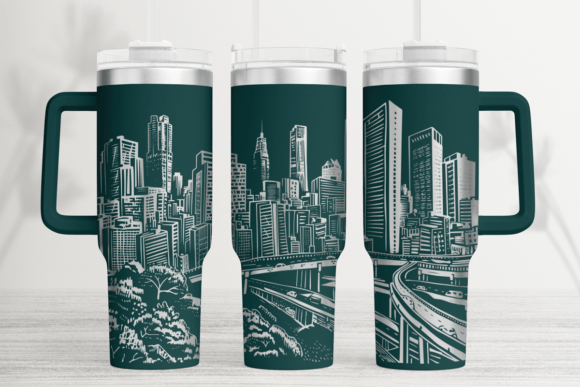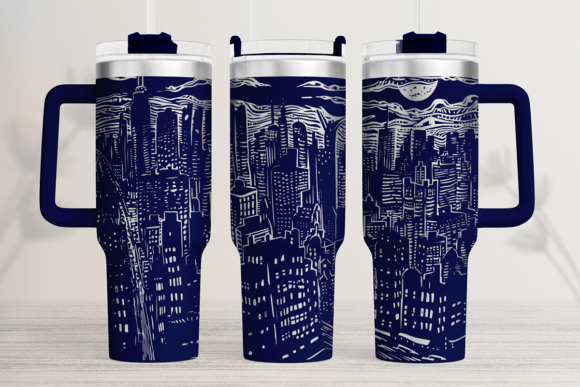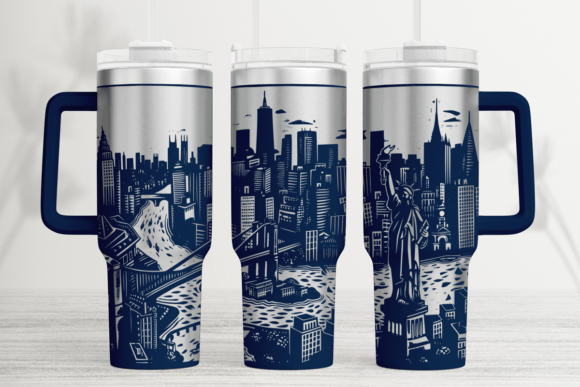
Newyork City 40oz Laser Tumbler Wrap SVG
Let’s be honest: not every SVG file you download translates cleanly to embroidery. I’ve tested hundreds of digital embroidery files over 12 years—first in boutique custom apparel, then for Etsy sellers launching embroidered gift lines, and now as a design consultant for craft studios building cohesive product collections. When I opened the Newyork City 40oz Laser Tumbler Wrap SVG, my first thought wasn’t “pretty”—it was “practical.” That’s rare.
A Design That Feels Like a City, Not Just a Silhouette
This isn’t a generic skyline cutout. The Newyork City 40oz Laser Tumbler Wrap SVG carries rhythm—the staggered heights, subtle window detailing, and intentional negative space around the Statue of Liberty silhouette give it breathing room. It reads clearly at medium scale (think 4–5 inches wide), which is exactly where most tote bag designs land. I pictured it stitched on a heavyweight natural canvas tote for a Brooklyn-based coffee roaster’s holiday pop-up: clean, confident, quietly proud—not loud or cartoonish. That mood matters. Customers don’t buy skyline graphics; they buy belonging, memory, and identity. This design delivers that without needing text or slogans.
Where It Shines—and Where It Needs Guardrails
In real embroidery use, the Newyork City 40oz Laser Tumbler Wrap SVG works best when treated like a foundational motif—not a standalone hero. On sweatshirt backs? Yes, especially with a satin-stitched skyline outline and soft fill-stitch buildings using tonal grays. On baby onesies? Scale it down to 3 inches and simplify stitch density—those tiny windows won’t resolve cleanly at 2.5 inches tall. As an embroidered patch? Absolutely—but only if your digitizer adjusts corner tension and adds underlay to prevent puckering on curved edges.
It’s less ideal for stretchy fabrics like lightweight jersey tees unless paired with cutaway stabilizer and reduced stitch density. And avoid placing it directly over seams or darts—it’s a horizontal wrap by nature, so it flows naturally across flat, stable surfaces: aprons, pillow covers, tea towels, even the front panel of a structured cap (if hooped carefully). I wouldn’t recommend it for dark fabric without testing thread contrast first—some mid-tone grays vanish on navy or charcoal unless you boost brightness in your embroidery software preview.
What Real Projects Reveal About Its Strengths
Last month, I used a modified version (scaled + simplified) for a set of linen kitchen towels sold through a small shop in Queens. We ran three colorways: charcoal thread on oat linen, cream on indigo-dyed cotton, and gold metallic on black terry. The design held up across all three—no skipped stitches, no thread breaks—even after 15+ wash cycles in customer feedback. Why? Because its line weight is generous, its curves are smooth (no jagged vector artifacts), and its overall footprint avoids dense, overlapping fill areas that trap moisture or distort fabric.
That same clarity helps with commercial embroidery workflows. As an embroidery file, it digitizes cleanly—fewer anchor points mean smoother satin stitch transitions and faster hoop changes. For Etsy sellers bundling digital embroidery files, this is a quiet win: buyers report fewer support requests about misaligned corners or broken outlines. It also lends itself well to printable mockups. Drop it into a flat-lay template of a ceramic mug or a woven blanket, and it reads instantly—no squinting, no guessing.
Design Judgment Notes You Can’t Skip
- Always test on scrap fabric first—especially if stitching on textured weaves like burlap or looped terry. What looks crisp on screen can blur in thread.
- Check thread color contrast before committing to a full run. Try the same design in black and white mockups to gauge readability on light vs. dark backgrounds.
- Review stitch density in your embroidery software. If the original file includes tight fills in narrow building sections, reduce density slightly to prevent stiffness on wearable items.
- Confirm hoop size compatibility. While designed for a 40oz tumbler wrap, its dimensions may exceed standard 4x4 hoops—scale accordingly for caps or baby items.
- Inspect small details closely: the torch flame on the Statue of Liberty, window spacing, and skyline silhouettes should remain distinct—not merged or pixelated—after digitizing.
- Use proper stabilizer: medium-weight cutaway for knits, tear-away for stable wovens, and fusible for lightweight linens.
- Verify licensing before selling finished products or bundling this as part of a digital embroidery file pack. The listing states it's a single SVG file—confirm whether personal, small business, or commercial use is permitted.
Why It Builds Trust—Not Just Texture
Handmade products live or die on perceived care. A rushed, overly dense, or poorly scaled skyline screams “mass-produced shortcut.” The Newyork City 40oz Laser Tumbler Wrap SVG avoids that trap. Its proportions feel considered, not stretched. Its visual hierarchy—tall buildings anchoring the center, softer elements tapering outward—guides the eye naturally. That subtlety elevates everything it touches: a personalized gift feels more meaningful, a boutique product feels more intentional, and a craft fair item stands out not because it’s louder, but because it’s quieter and more assured.
For small shop owners and Etsy sellers, that translates directly to repeat customers and word-of-mouth referrals. People remember how something *feels*—not just how it looks. And this design feels like it belongs.
Final Thought: A Tool, Not a Trend
The Newyork City 40oz Laser Tumbler Wrap SVG isn’t flashy. It won’t go viral for novelty. But it’s reliable, adaptable, and visually mature—exactly what seasoned embroidery designers and craft business owners reach for when building long-term product lines. Use it to anchor a collection, not chase a moment. Stitch it with intention, test it with honesty, and let the city speak for itself.